GOAL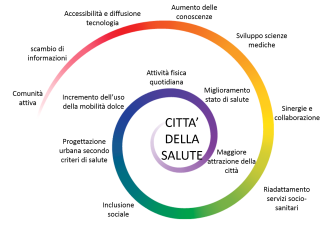 The project aims to identify the role of the city as a driver for the development of practices and spaces that promote healthier behaviors and lifestyles. To this end, new organizational models and communication technologies are being studied.
The project also evaluates the role of current stakeholders typically involved in healthcare, as well as potential new actors who could play an active role in fostering better health culture, greater awareness, and improved health practices.
The ultimate goal is to create a positive spiral to transform Bergamo into a “City of Health”—a city in which every citizen actively contributes to promoting health through an integrated system of knowledge, technology, and the structuring of urban environments.
RESEARCH AREA DESCRIPTION
In recent decades, health promotion challenges have significantly increased in complexity, diversity, and scale. An aging population, rising obesity rates, unhealthy lifestyles (ranging from poor nutrition to lack of physical activity), and sometimes unhealthy urban environments all have a negative impact on often outdated healthcare systems.
While the situation is both discouraging and serious, these challenges also present wide opportunities for research and innovation. For example, the unprecedented availability of data for both doctors and patients could lead to more streamlined healthcare systems and more informed choices for a healthier lifestyle.
Advances in sensor technologies may enable a deeper understanding of human behavior and thereby contribute to the active creation of spaces and tools that promote health.
Clearly, the implications of these developments go far beyond the walls of a clinic and directly into the design and use of urban spaces.
RESULTS AND PROPOSALS A thorough analysis of Bergamo’s context and meetings with stakeholders revealed several important characteristics of the city in relation to health. First, Bergamo is a medium-sized city offering an efficient socio-healthcare system.
In addition, the city and its surrounding province benefit from a widespread network of associations and informal social support systems, which are indirect indicators of strong community cohesion.
The main issues include a significantly aging population, increasingly unhealthy lifestyles (poor eating habits, sedentary behavior), and an urban environment that does not always facilitate healthy choices (few and fragmented bike lanes, heavy traffic). Another challenge is the lack of integration among the many health-related initiatives across the area, which leads to a loss of potentially important synergies.
The interventions to be pursued include:
• Valuing elderly and foreign populations within the community
• Increasing the integration of health, social-health, and social service pathways
• Leveraging the local healthcare excellences to maximize their impact on the territory
• Promoting cultural and social integration in lifestyle choices for better health
• Making healthy choices easier and more accessible in daily urban life
• Simplifying the use of technology for everyone
• Encouraging intergenerational solidarity
While technology can undoubtedly provide crucial support for initiating this process, it must be integrated systematically within the urban context, with attention to its limitations and specificities.
Active citizen participation is also essential to achieve shared and broadly accepted solutions.
A widely used method to support this kind of engagement is the home/living lab model: open innovation environments in real-life settings, where the active involvement of end users enables the co-creation of new services, products, and social infrastructures.
HomeLab Bergamo will therefore be created, bringing together a community of elderly residents willing to participate in research, a multidisciplinary group of scientific researchers, and local businesses. Its goal will be to conduct in-home and care-facility experiments that support the development of innovative technologies for health, well-being, and elderly independence—assessing their safety, effectiveness, usability, and accessibility.
HomeLab Bergamo is intended to serve as a container and interactive framework that systematically and synergistically brings together local actors. It will benefit from the technological/scientific background and numerous local and international partnerships of its affiliated members.
RESEARCH TEAM
Paolo Malighetti (Associate Professor, UNIBG)
Katia Passera (Research Fellow, UNIBG)

